
Explore the technologies, principles, and challenges behind our solutions. Our knowledge base provides clear explanations and access to in-depth technical resources and downloadable documents.

Scan distortion is a fundamental limitation in beam scanning systems such as SEM, STEM, and e-beam lithography. Even when resolution is high, imperfections in magnetic fields and coil design can significantly affect positioning accuracy and overall system performance.
more information
 AI-generated
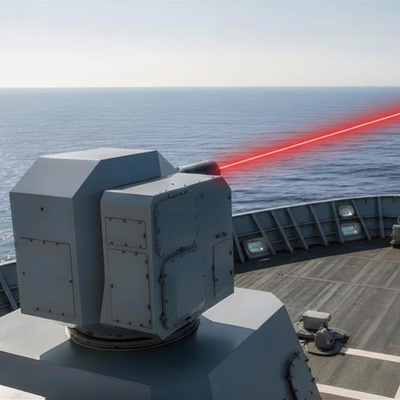
High Energy Laser (HEL) systems are rapidly becoming a cornerstone of modern Laser Directed Energy Weapons (LDEW). While much attention is given to beam quality and targeting systems, the real enabler of performance is often overlooked: the laser power supply.
more information
 AI-generated
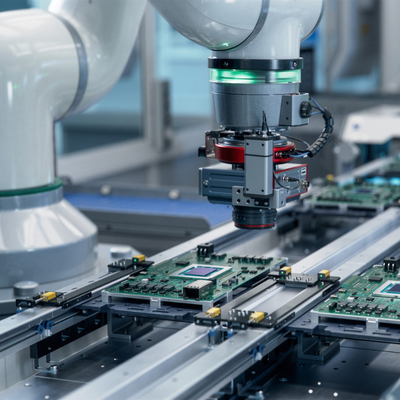
Catalogue PSUs often fail in tightly integrated, harsh, or unusual electrical systems, causing redesigns, delays, or reduced performance. Our customization turns early system needs into manufacturable solutions that cut integration risk, speed time-to-market, and justify NRE for high value programs.
more information
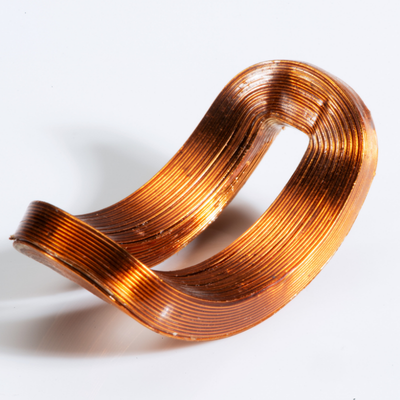
Precision bending enables self-carrying coils to achieve complex geometries while maintaining high magnetic field accuracy. Learn how controlled bending, specialized tooling, and thorough validation ensure reproducible coil quality for demanding electromagnetic applications.
more information
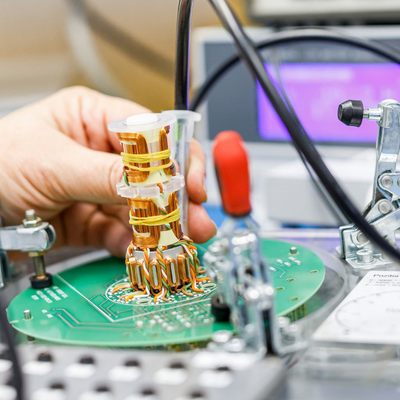
Electron beam aberrations are a key factor limiting imaging performance in high-resolution electron microscopy. Discover how precision-engineered multipole coil assemblies, advanced manufacturing techniques, and ultra-stable power supplies help minimize aberrations and achieve exceptional beam accuracy.
more information
 AI-generated
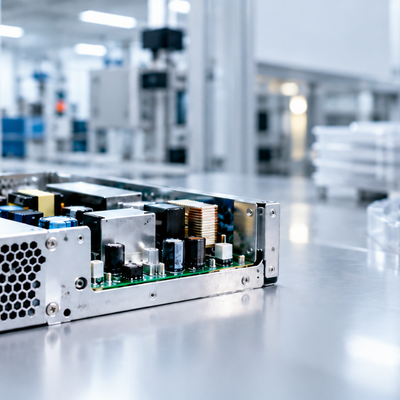
Learn how SFC Energy's change control and obsolescence management protect your qualification investment over the full product lifecycle.
more information
 AI-generated
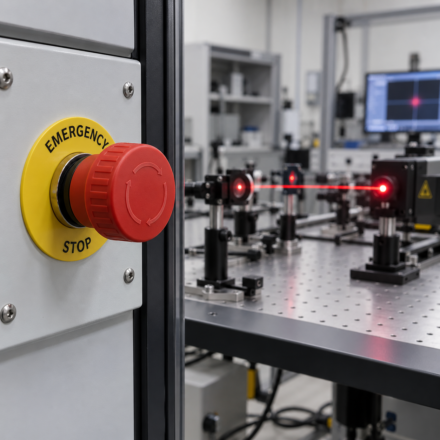
Power supplies can power hazardous systems, like a high-power LASER. These LASERS can cause irreversible injury in a fraction of a second. There is no "second chance." An interlock is often the only thing standing between normal operation and a life-changing injury.
more information
 AI-generated
Modern semiconductor FAB’s are getting bigger. With that, the power infrastructure getting more complex and the distance between the central mains transformer and the semicon manufacturing equipment increases. Due to the increased cable lengths, the harmonic distortion of the grid increases if no preventive actions are taken. This can influence equipment and can cause instabilities on the grid.
more information
 AI-generated
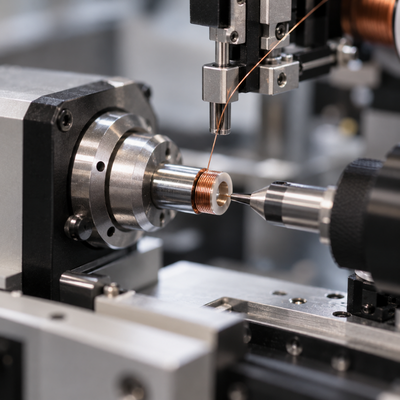
Precision coil performance is primarily defined by geometry and magnetomotive force (NI), which determine key parameters such as field strength, force, uniformity, and dynamic behavior. Learn how translating application requirements into an NI budget provides the foundation for coil design, while wire gauge is selected subsequently to define the appropriate voltage, current, and insulation characteristics.
more information
 AI-generated
Standard orthocyclic winding fills a rectangular winding window: every layer has the same number of turns, and the coil window is a simple rectangle. Many applications, however, require coils that do not fit a rectangular envelope. Learn about the principal window types, the winding challenges they introduce, and the relationship between to magnetic field quality.
more information
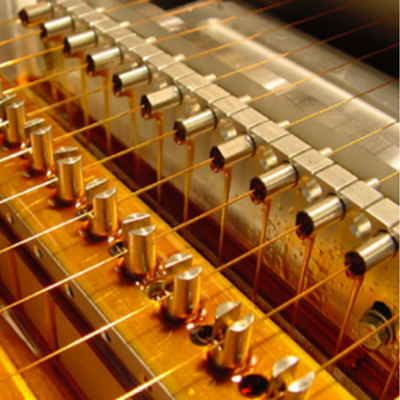
The insulation system determines a coil's dielectric strength, thermal class, and — because it occupies volume — its fill factor. Selecting the right grade and material is a design decision that interacts directly with wire type, winding method, and operating conditions.
more information
 AI-generated
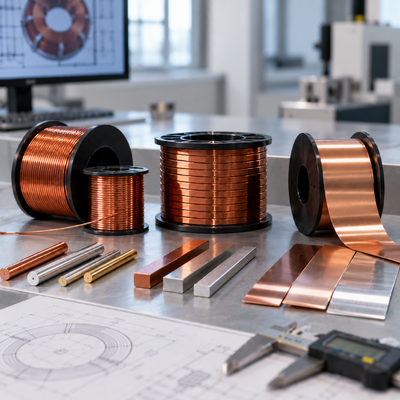
The conductor material sets the electrical, thermal, and mechanical baseline for a coil. While most precision coils use copper, the choice is not always automatic due to weight constraints, vacuum environments and more. This paper covers the principal conductor materials, their trade-offs, and how each interacts with the winding process.
more information
 AI-generated
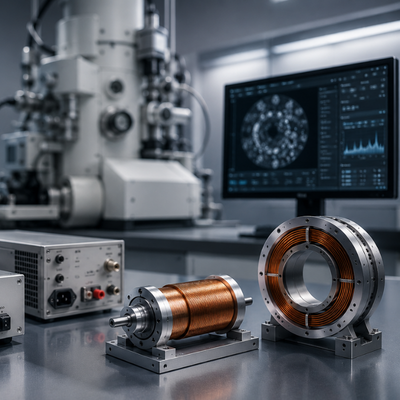
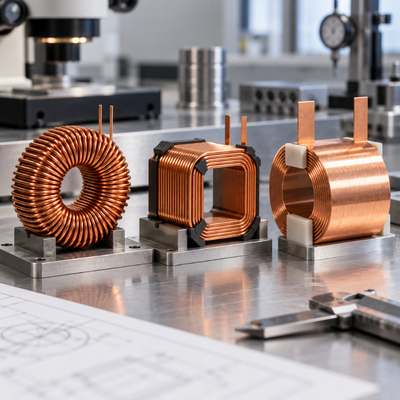
One of the earliest decisions in coil design is whether the winding will be self-supporting (self-bonding) or wound onto a bobbin or core. This choice shapes the entire manufacturing process, the tolerance chain, and the coil's long-term performance. Both approaches are well established, and both are used in production — but they are not equivalent. This paper explains why, and identifies the narrower set of applications where one remains the better decision.
more information
 AI-generated
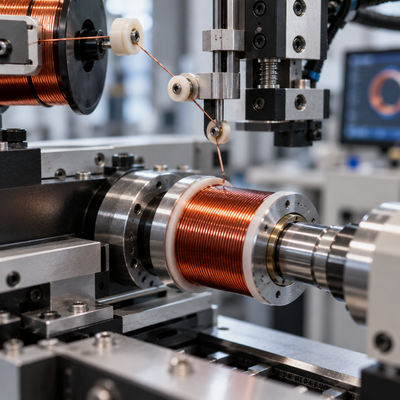
Wire geometry determines fill factor, magnetic field quality, manufacturability, and cost. Selecting the right wire type is therefore an electromagnetic and manufacturing decision. In most applications, wire gauge can be selected late in the design process, since turns and current are tradeable for a given magneto-motive force requirement (see Functional Specifications for Precision Coils).
more information
 AI-generated
Electromagnetic coils are at the heart of scanning magnets, beam-steering dipoles, actuators, transformers, and sensors. While the electrical design defines the required turns, conductor cross-section, and current density, it is the winding process that determines whether those parameters are realised in practice. Fill factor, dimensional tolerances, and parasitic field components are all governed by how the wire is placed.
more information